
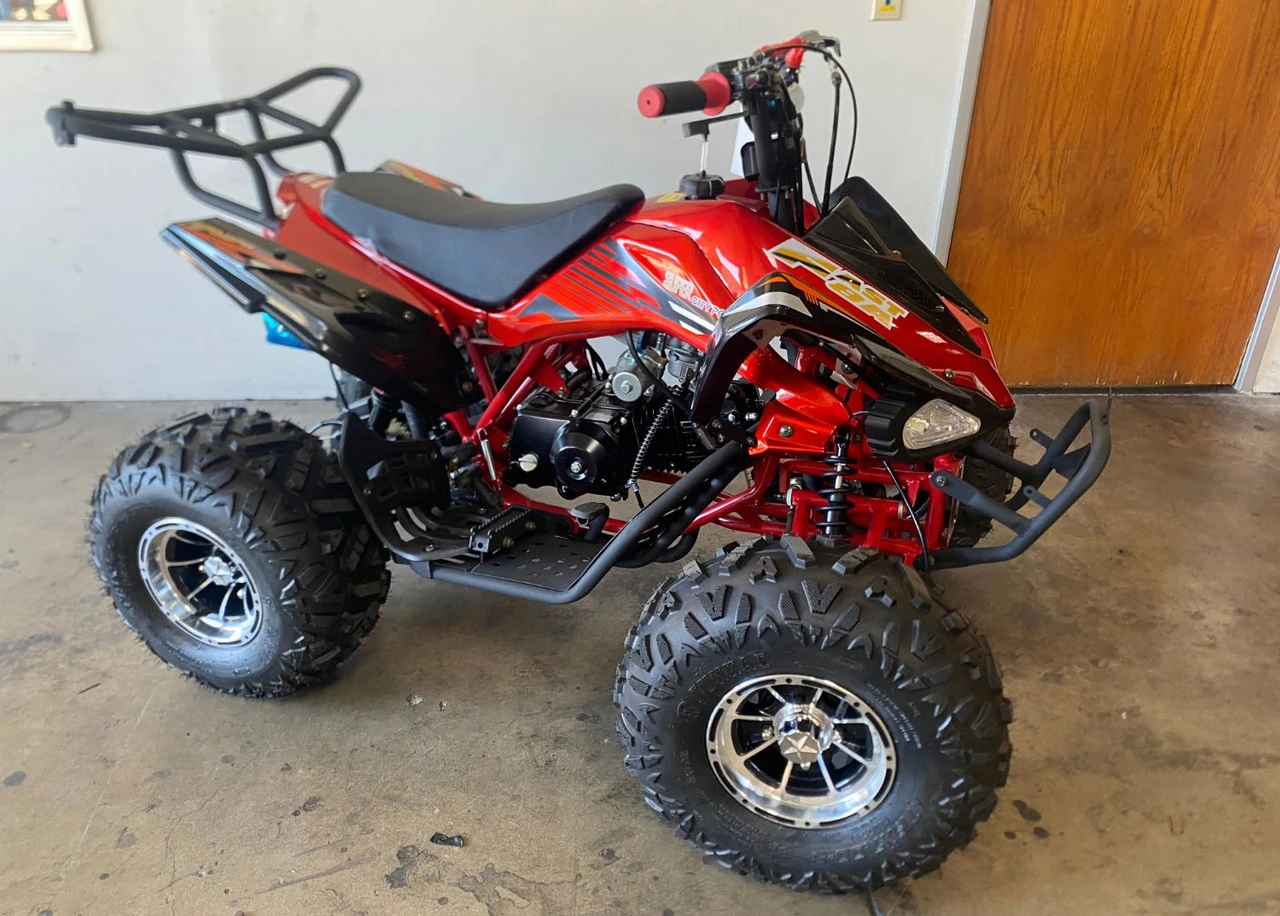
Most buyers start with specs. They should start with use. The right ATV is the one that fits your trails and your skill, while the biggest engine number may tell you very little about that fit.
What will you actually do with it?
We’ve watched buyers fall in love with a sport ATV in the showroom. Then they try to strap tools to it for weekend jobs. It rarely ends well.
Ask yourself where the machine will spend most of its hours. Pure recreational trail riding is one job. Mixed use is another, blending weekend fun with light property work such as hauling firewood and feed. That’s fine. You just need to admit it up front, because the frame and gearing you need flow from that answer.
A utility ATV has racks, tow points and low gearing for pulling a small trailer at low speed. A sport ATV is lighter and quicker to turn. It has long-travel suspension for berms and jumps but almost no room for cargo. One is built to work hard while loaded. The other is made to move fast without a load.
Don’t buy for the rare ride. If you tow a trailer most weekends but hit fast trails twice a year, buy for the towing. You will enjoy ownership more when the weekly job feels easy. The fun rides can still be fun on a utility quad, while the work jobs are rough on a sport quad.
If your split is truly even, lean towards utility. You can fit tougher tyres and a winch to a utility ATV, then tackle hard off-road tracks with care. You can’t add cargo strength to a sport ATV that was never built for it.
What engine size fits your weight and skill?
Engine displacement in cc gets all the attention. It should not decide the purchase by itself. A bigger number does not guarantee a better ride. It brings more weight and sharper throttle response, which can punish small mistakes.
Match the motor to your body and your hours in the seat. A lighter new rider does not need a big-bore motor to enjoy trails. A smaller motor is easier to modulate through ruts and more manageable when you stand through corners. Heavier riders need more torque to hold speed on hills. That is physics, rather than ego.
Youth sizing deserves its own pause. Kids should ride machines built for their age and size, with speed limiters and adult supervision at all times. An adult-size ATV is never a starter bike for a child, even for a short loop near the shed. Skills do not transfer that fast. Confidence outruns judgement at that age.
Be honest about throttle discipline too. If you stab the throttle when you get nervous, a large motor will get you into trouble faster than you can correct it. Starting modest is smart. You can sell and step up later once you have real seat time behind you. Your second choice will be far better informed than your first.
Match the rider, not the price tag. The cheapest way to own an ATV for years is to buy one you can control on day one.
Do you really need 4WD?
Sales talk pushes 4WD as the safe pick. It is not always the smart choice for recreational riding. Think about your ground before paying for hardware you may rarely use.
Two-wheel drive is lighter and simpler. It uses less fuel and turns tighter on dry hardpack. It also has fewer shafts and joints to service. For groomed trails and dry fire roads, 2WD is plenty for most weekends. You will feel the difference in steering effort after three hours in the seat.
Four-wheel drive earns its keep in mud, sand, steep hills and slick creek entries. It keeps pulling when one axle would spin. That traction costs you weight and drag, which show up in fuel use and tyre wear. You also pay for it in the purchase price and later service bills.
What about automatic transmissions?
Most modern ATVs use a CVT or automatic setup. There is no clutch or foot shift to learn. You select high or low for riding, with reverse on the same lever for backing out.
That simplicity helps new off-road riders a lot. You can focus on line choice and body position instead of gears. The trade-off appears on steep descents, where a CVT gives less engine braking than a manual gearbox. You rely more on the brakes to hold speed. Ask for low range and descent control if your tracks drop hard, and test that feel on a slope before you commit.
Will it clear your trails without beating you up?
Ground clearance and suspension decide whether you enjoy rough ground or dread it. Spec sheets can hide this truth. Your back does not lie after a long day.
Ground clearance is the space under the chassis. It determines whether you straddle logs, rocks, deep ruts and washouts or drag through them. Recreational riders who explore beyond graded roads often need more clearance than they expect. Creek crossings and washed-out climbs catch low machines fast. Measure your worst track rather than your best one, then shop to that standard.
Suspension matters more for control than comfort, although comfort helps on long rides. Independent suspension lets each wheel move on its own over roots and corrugations. A solid axle moves both sides together and kicks sideways on square edges. After two hours on chopped-out trails, that difference has a big effect on fatigue. You steer straighter when the tyres stay planted.
Tyres connect both points in the real world. Stock tyres suit hardpack and light gravel. Mud and soft sand need taller lugs with wider spacing, so they shed muck instead of packing solid. Hard rock calls for tough sidewalls that resist cuts and pinch flats. Ask what comes as standard and what a swap costs, as some dealers bundle a tyre upgrade at sale time for less than a later refit.
Once you’ve worked through use, size and drive, you can compare machines side by side and buy atv australia models from a dealer that clearly lists warranty terms and parts backup.
Don’t judge this on a car park loop.
Take the ATV over roots and off-camber ground if you can. You will learn more in ten minutes on rough dirt than in an hour on pavement.
Are you legal and protected to ride?
This question comes late in most guides. It should appear early in your budget. Fines and injuries cost more than any accessory.
Start with the rider. More than 15,000 Americans have died in ATV-related incidents since the agency began tracking them in 1982 (U.S. Consumer Product Safety Commission). That number is a blunt reminder that skill and sizing matter more than power. New riders need training and space to practise. Young riders need age-size machines and constant supervision. No trail is worth rushing this part.
Dress for the crash you hope never happens. A certified helmet is non-negotiable. Add goggles, gloves, long sleeves and over-ankle boots as your baseline kit. Many regulars also wear chest protection and knee guards for rocky trails. Good gear does not make you invincible. It gives you some margin when a root kicks the bars sideways.
Check local rules before you pay. Registration and licensing for off-road and recreational ATVs vary widely by state and region. Some areas allow off-road-only use with no road access, while others require registration even for private land. Age limits and helmet laws also differ. Call your local transport authority and ask in plain terms what you need to ride legally where you plan to ride.
What does it cost after you bring it home?
Sticker price is only the entry ticket. Running costs determine whether the ATV gets used or sits in the shed.
Fuel range tops the list for trail riders. A day on remote tracks can burn far more than you expect when riding in low range with wheel spin. Note the tank size and real-world range instead of relying only on brochure claims. If your loop has no fuel stop, you need some margin and a safe carrying option. There’s nothing fun about nursing an empty tank back at walking pace.
Tyres and servicing come next. Aggressive off-road tyres grip well but wear fast on hard surfaces. Brake pads wear faster in mud and sand. Belt service on a CVT, oil changes and air filter cleaning add up across a season. Ask for service intervals in hours and request the costs in plain terms. Write them down and compare models on that sheet.
Insurance and resale shape the long-term figures too. Some policies class an ATV as farm plant, while others class it as recreational. The wording changes theft cover and liability. Ask your insurer how they class your planned use. On resale, clean utility machines with service records hold value better than thrashed sport machines. Buyers pay for care.
Electric options change this calculation for some riders. A battery ATV has no fuel stops and far fewer fluids to service. It runs quietly, which suits early starts near houses and stock. Range and charging time are the limits. If your rides are short loops from a powered shed, electric can work. If you tour far from power, fuel still wins.
Who fixes it when it breaks?
Every ATV breaks eventually. The real issue is how quickly you can get parts and help. This matters more the farther you live from a city.
Ask about dealer backup in concrete terms. Find out how long the warranty runs and what voids it. Ask whether mud and water use count as abuse, and who does warranty work if you bought interstate or online. Check the usual wait for common parts such as belts, bearings, ball joints and seals. Vague answers here are a warning sign.
Parts backup is part of ownership. A cheap ATV with no spares on the shelf becomes expensive the first time you wait weeks for a belt.
Online sellers can look tempting on price. Some provide good support through phone help and fast freight. Many do not. If you ride remotely, you need a dealer that answers and ships fast. Ask other owners in your area who stocks parts. That local knowledge beats any brochure claim.
Check accessory support as a sign of long-term usefulness. Look for winches, racks, bull bars and mirror kits made to bolt straight on. Strong aftermarket support means the platform is more likely to stay useful and remain easier to sell. Oddball machines with no accessories fade fast. You don’t want to own one.
Finish with a test and a paper check. Ride the short list. Read the warranty card, then confirm the service book and parts list. Choose the ATV that fits your answers rather than the one that shouted loudest in the ads.